Racism – if only we could just shake it off
A belly dancer reflects…
Sa., 8 November 2025
“Life isn’t about waiting
for the storm to pass.
It’s about learning to
dance in the rain.”
– Vivian Greene
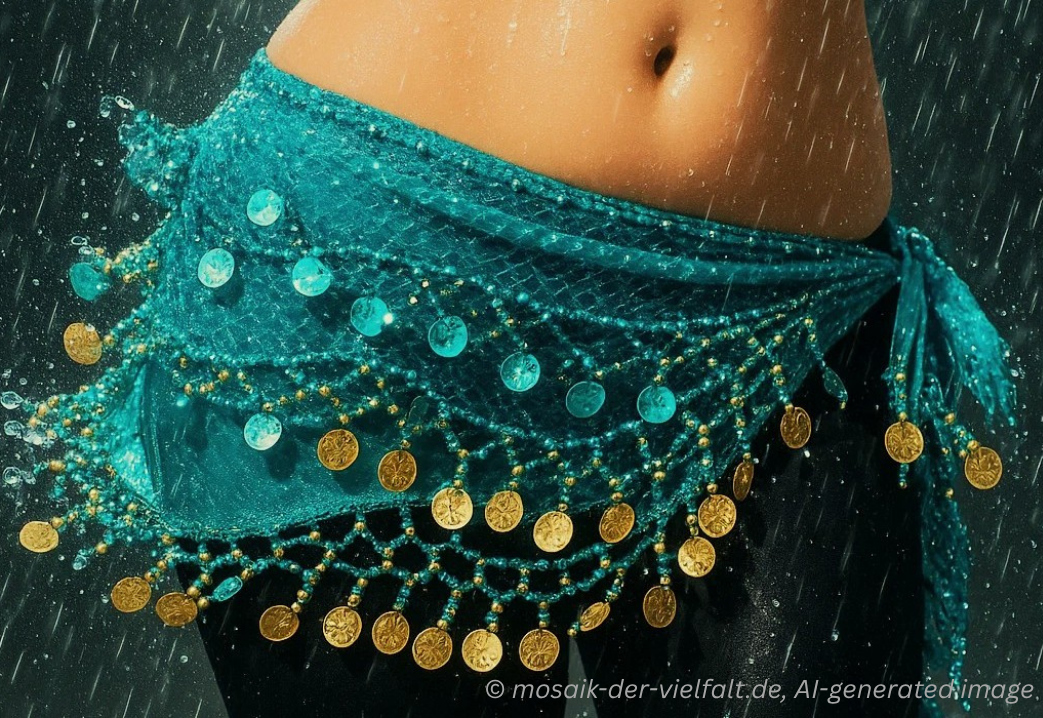
Why are some of us Germans so rigid in our ways of thinking – as stiff, perhaps, as the notoriously inflexible hips we’re occasionally made fun of? Here’s one hobby belly dancer’s suggestion for a mental exercise in loosening up one’s fixed view of the world.
More Than Just a Hip Movement
Lately I keep thinking about a movement from belly dance – one of my absolute favourites:
the so-called “shimmy”.
In order to do a “shimmy”, you have to stand with your feet hip-width apart and your knees slightly bent. Then you move one knee at a time forwards and back – very quickly, as if cycling on the spot. The trick is to let your hips go loose and to unclench your butt.
Letting go of any rigidness sounds much easier than it is. But once you get the hang of it, it’s like riding a bike – it becomes second nature and is stored in your muscle memory forever...
One Cold December Day…
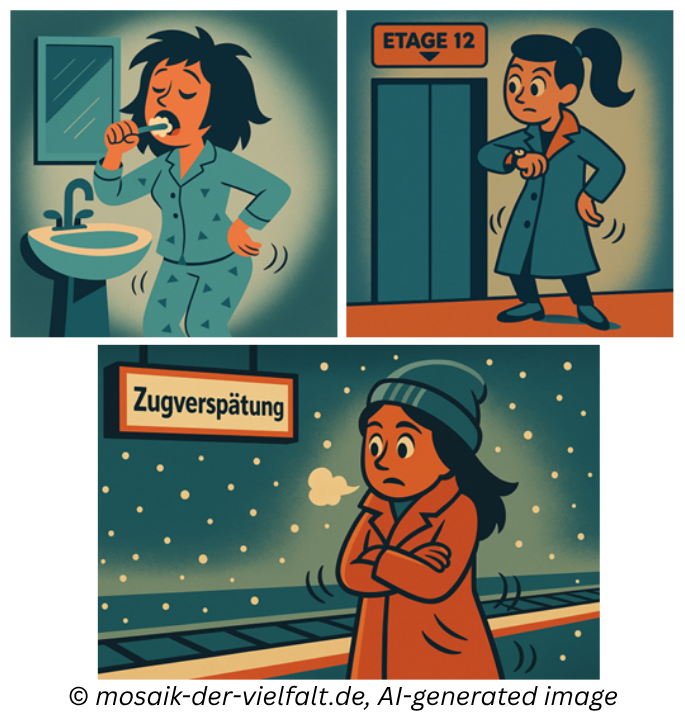
For a while, I practised this kind of dance movement whenever and wherever possible – including at the German train station where I would wait for the notoriously late Deutsche Bahn to arrive. Wrapped up in a long coat on freezing days, most people assumed I was simply shivering outside in the cold.
One icy December day, while waiting for my train again, I caught myself automatically shifting into shimmy mode without even realising it. At the same time, a person next to me who was staring at his phone kept muttering common racist slogans:
“It’s all the fault of those foreigners! These migrants just don’t fit into our German cityscape …” He kept ranting and ranting, like an endless chain of carriages rattling past. Then he finally looked up from his screen and paused: “Are you cold, Fräulein? You’re shivering…”
I could have started a discussion then and there, but instead I just said: “The train will be here soon…” and distanced myself quickly from his audible range of racist remarks.
Whether you “shake it off” or take a (dance) step back: it’s useful to recognise dead-end-conversations before you find yourself stuck in one. The hate-filled echo of those parroted slogans already sent a clear warning: “Beware, this person is merely a waste of time!” Best spend my energy on something positive – like dancing or writing.
But with whom is it worthwhile to engage in a genuine conversation? Where does the echo chamber end and actual dialogue begin? With whom can we build bridges of shared understanding on common ground?
Welcome to The Global Village
One would assume that in an age of globalisation we’d all become increasingly open-minded. Thanks to digitalization’s real-time connectivity, the world is merging ever more into a 21st-century Global Village. The result: a dynamic exchange of ideas, cultures and perspectives – 24/7, all around the globe and at a simple touch of your device's screen.
‘Fantastic’ is what you might think. However, since the algorithmic echo chambers of social media tend to reflect our own opinions back at us, our views are in fact being self-reinforced and narrowed rather than widened and challenged. And so, ironically, we end up retreating into our own little bubbles within this worldwide village after all.
It might be wise, therefore, to occasionally look up from our screens and face reality unfiltered and disillusioned:
Germany is already a country deeply shaped by immigration. That fact won’t change – only how we choose to see it and live with it.
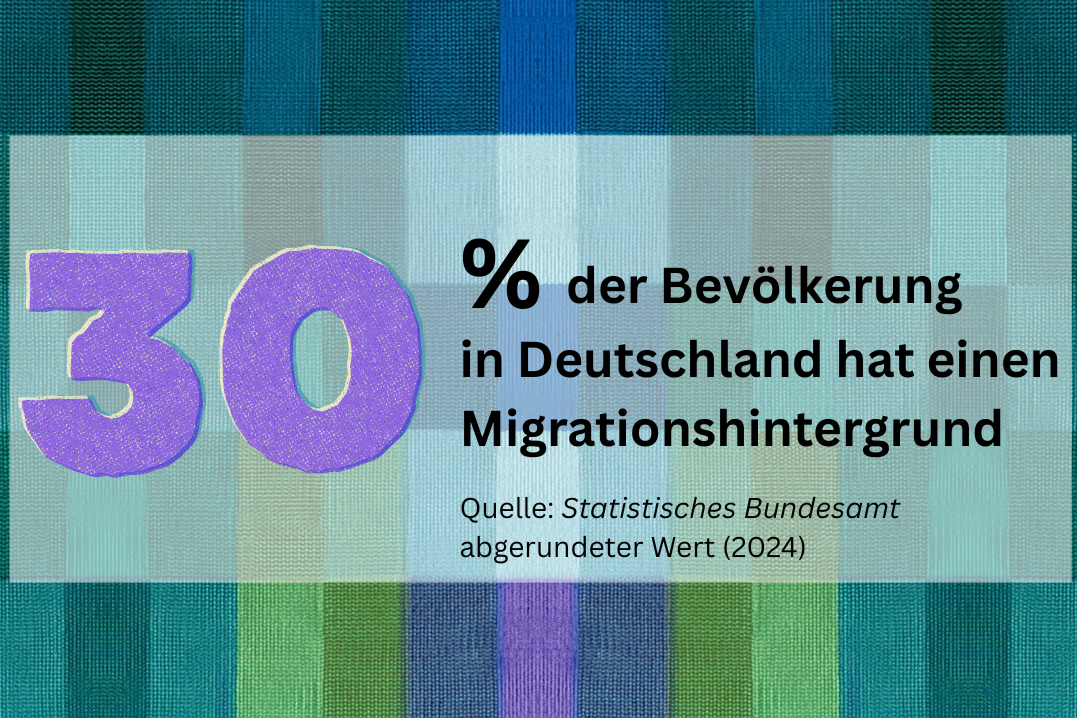
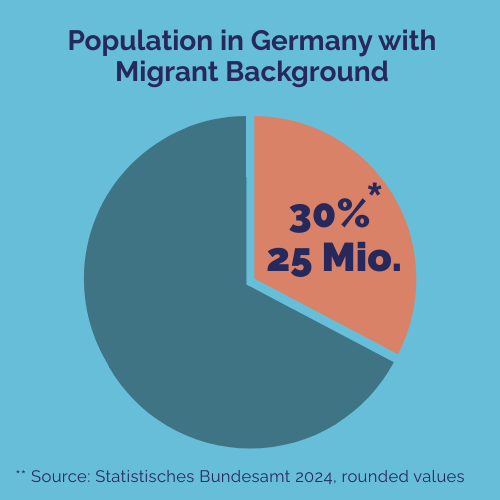
Translation: About 30 % of Germans have a migrant background (source: Statistische Bundesamt 2024)
And so we can either rage about it and let “haters hate”, or we can view German society’s fabric - a patchwork of mixed ethnic backgrounds - as an enrichment to be written about proudly. After all, isn’t it precisely this colourful variety that saves us from becoming a monochrome little village where everyone has similar noses, names and narratives?
Here's my advice to some of us, therefore: Get curious about other cultures, loosen up those German hips and let your heart dance (the shimmy will follow… 😉).
Note: This article reflects my personal experiences made as a German with mixed cultural background and was inspired by Lin Hierse’s article “Taiji gegen Rassismus – Ein Affenkampf” (Taiji Against Racism - a Monkey Fight). The train station encounter shall serve as a fictional but realistic example of everyday racism. The article is deliberately short and concise, though of course the topic is much broader and complex.
3D Diversity vs. 1D Perspective
Sa., 2 August 2025
"We don’t see the world as it is,
we see it as we are."
– Anaïs Nin
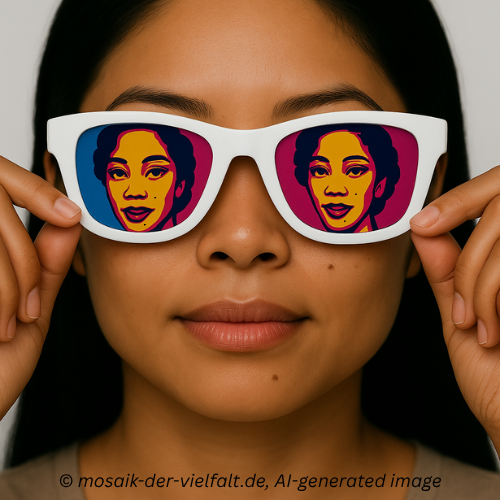
Diversity Begins at Home
In many German families, multiple cultures coexist under one roof. For example, one parent may have a different ethnic background; half-siblings from abroad strengthen cross-cultural ties; and grandparents—with their accents, different skin tones, and delicious cooking—lovingly enrich everyday family life.
"Every third person in Germany has migrant roots." (Bundeszentrale für politische Bildung)
Families don't care about skin colour
I grew up with a sister and several half-siblings—the only one who looked somewhat “different”. But it was never an issue. I always felt I belonged. We shared opinions, interests and (on occasion) the last piece of cake ;)

When Society Reflects Differently
But the older I got, the more I noticed: outside home, not everyone's view reflected me as clearly as I saw myself. Some gazes sent back a distorted version of myself. Questions like “Where are you really from?” or “Your German is very good!” felt like an Andy Warhol print of my not-typically-German-looking face—socially reproduced, stylised, but never truly me.
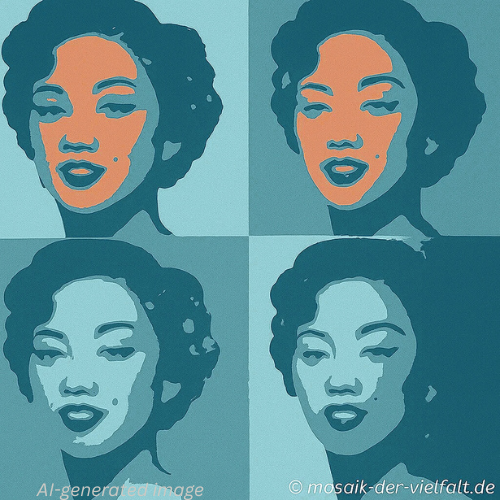
Beauty Ideals vs. Cultural Heritage
Did such encounters make me wish I looked different? As a child, I dreamt of looking like my favourite childhood heroes from TV—blonde, blue-eyed, with porcelain skin. My Cinderella-like beauty ideals have long since faded, however. Today, I’m far more interested in exploring what’s already within me – the roots of my cultural heritage.

Faux Pas Shortcuts
Do I take offence by these conversational missteps? Not always. Often, it’s not malicious—more of a reflex, a quick "mental shortcut" to help make sense of a complex world. But stereotypes and sweeping assumptions fall short. They get in the way of genuine encounters and meaningful connection.
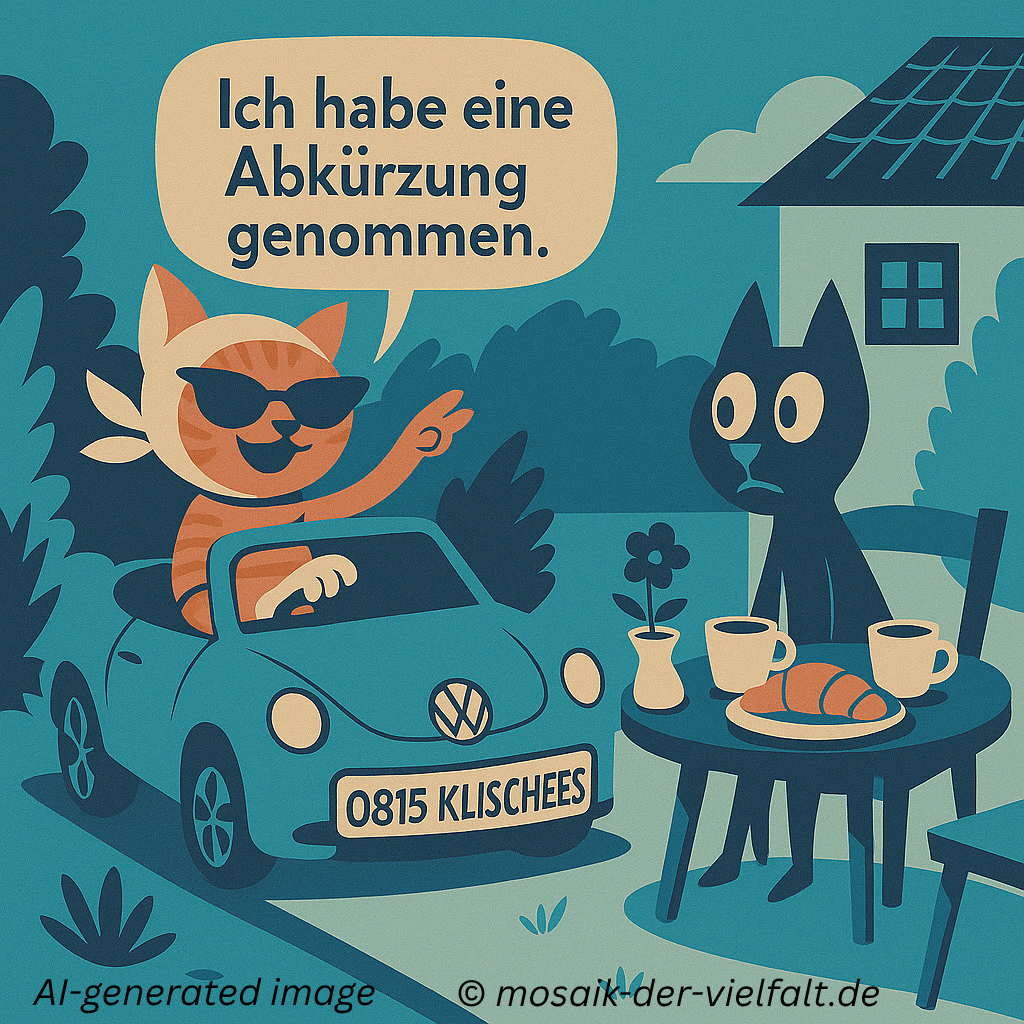
Translation: "I took a shortcut." [Common Cliches]
That’s why it’s worth it for all of us (including myself)...
... to try to give a fellow human being at a first encounter the chance to truly meet for the first time – instead of immediately thinking, “I already know this type...”.
What if we met others with something of a child’s gaze – still unclouded by stereotypes and sweeping generalisations – open-hearted, inquisitive, and free of preconceptions?
Do you – or someone in your family – come from a different cultural background? What kind of experiences have you had? Feel free to leave me a message.
Note: This article reflects my personal experiences. My aim is not to judge but simply to share my own perspective. Although I kept the article deliberately short, I’m aware of the fact that the subject is far more complex and deserving of further consideration.
Exotic Hobbies – Portal to Another World
Sa., 7 June 2025
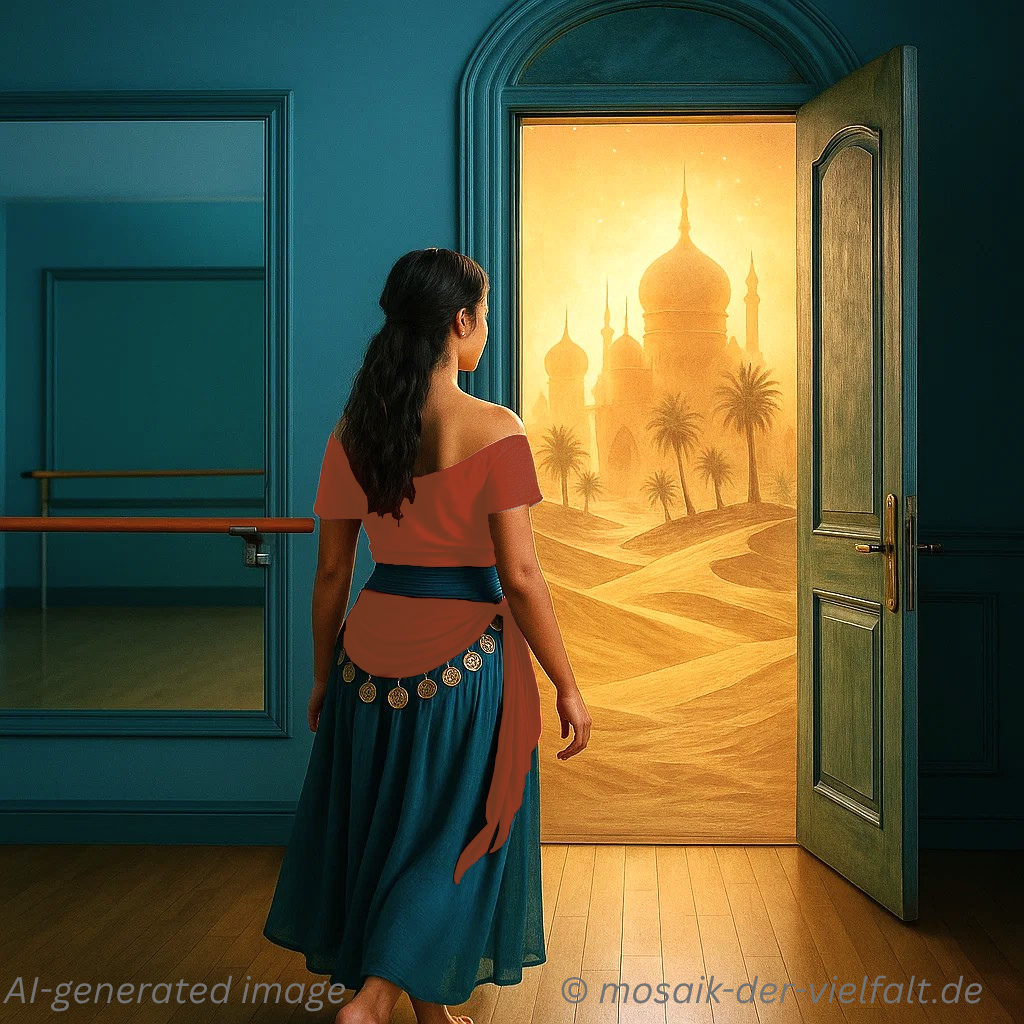
Belly dance, samba, manga … almost everyone has a friend who’s always going on about an unusual passion picked up from another corner of the globe – whether that’s Asia, Latin America or somewhere else entirely.
You might wonder why not just go for a run or hit the gym? It’s only a leisure activity like any other, after all – apart from the fact that it's not any other's cup of tea, probably...
But what if, behind the slightly weird looking door of an unusual hobby, there’s far more awaiting than you might expect?
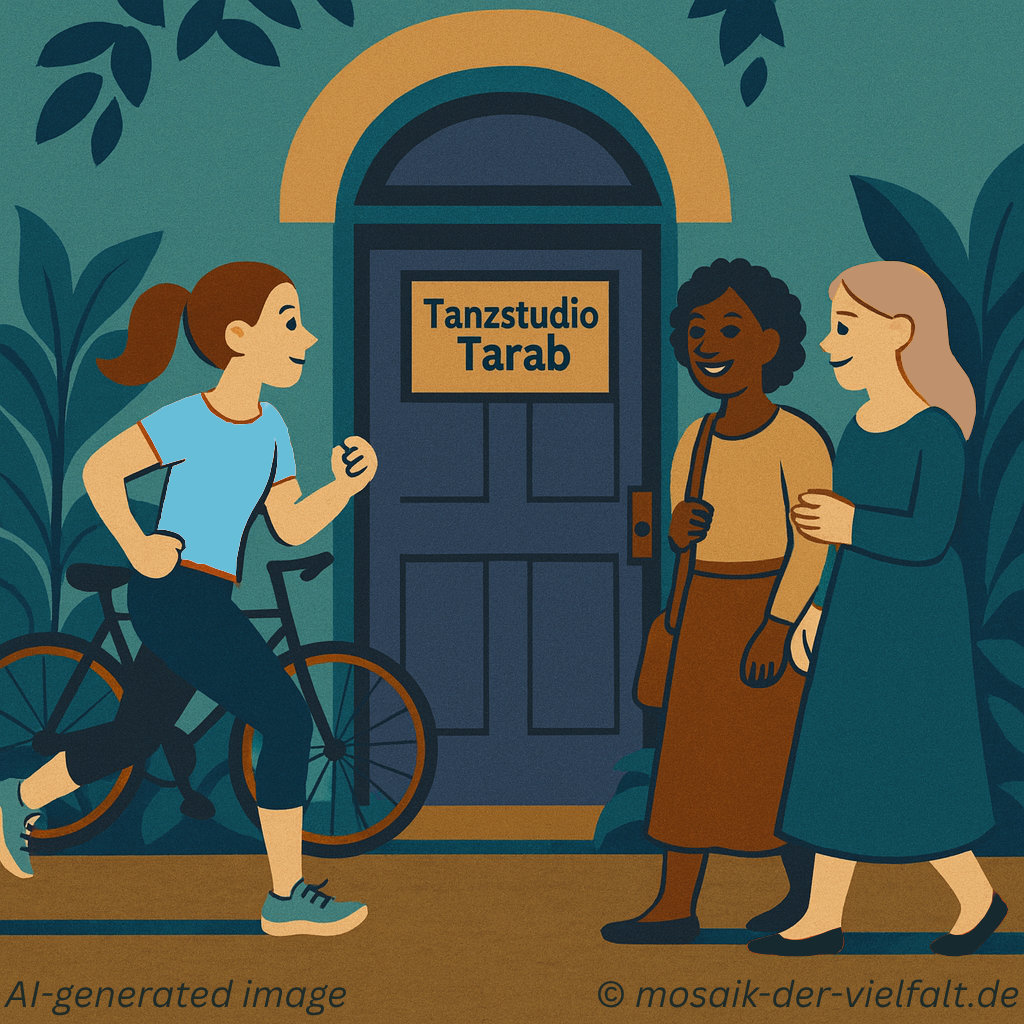
I can let you in on the secret, because I’m that “slightly quirky” friend. I’ll admit, when I first took up belly dance I didn’t give it much thought either.
The sensual movements drew me in, the brightly coloured, jingling hip-scarves caught my eye – and the class happened to be just round the corner. That's it.
Yet, as my body grew accustomed to each move, I slowly became attuned to the culture behind the dance...
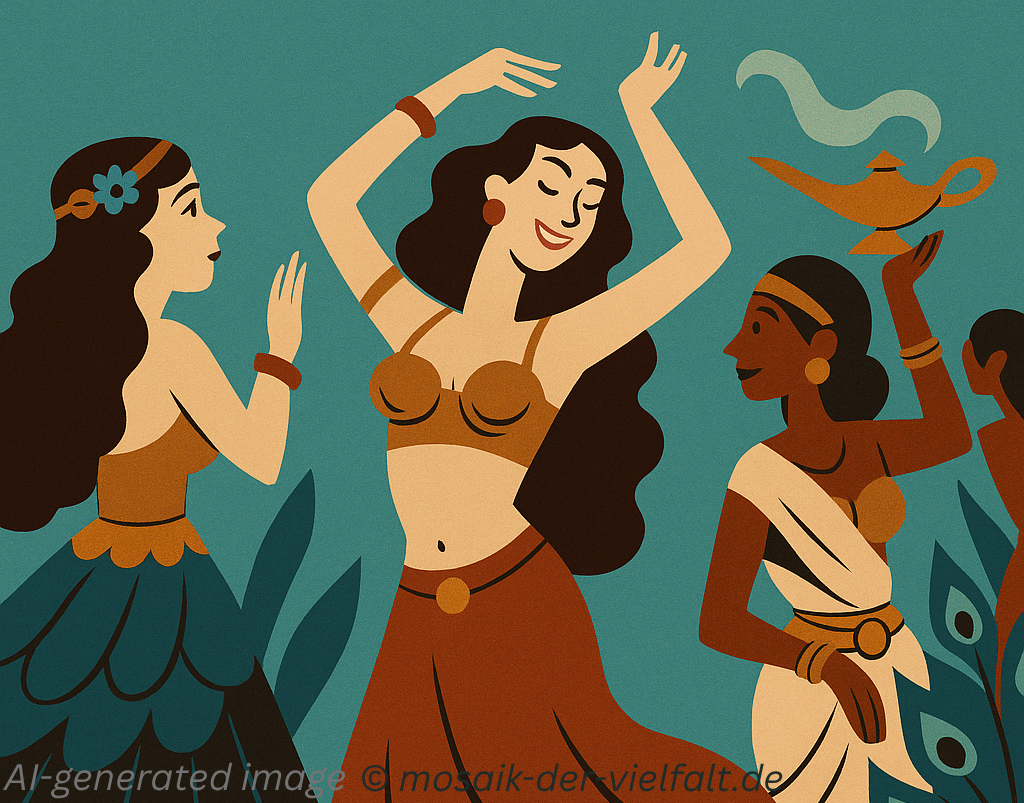
…and before I knew it I’d shimmied into a glittering, multi-facetted world of Middle Eastern dance:
Samia Gamal – whom I admired on YouTube in vintage films such as Ali Baba – soon became one of my favourite dancers, while Oum Kalthoum, the Arab world’s greatest singer, opened my ears to tarab: that moment of sheer musical rapture.
Dance, film, music … piece by piece a mosaic emerged until I began to understand the dance in all its cultural richness.
Then something unexpected happened:
The positive experiences from dancing began to spill over into everyday life. Approaching Arab culture through movement influenced encounters that sometimes even blossomed into friendships.
Some enthusiasts – driven by their passion for an unusual hobby – might go even further: One American belly dancer, for instance, moved to Egypt, learnt Arabic and found the love of her life there. A manga devotee from a tiny village studied Sinology, became an interpreter and now works for an international organisation.
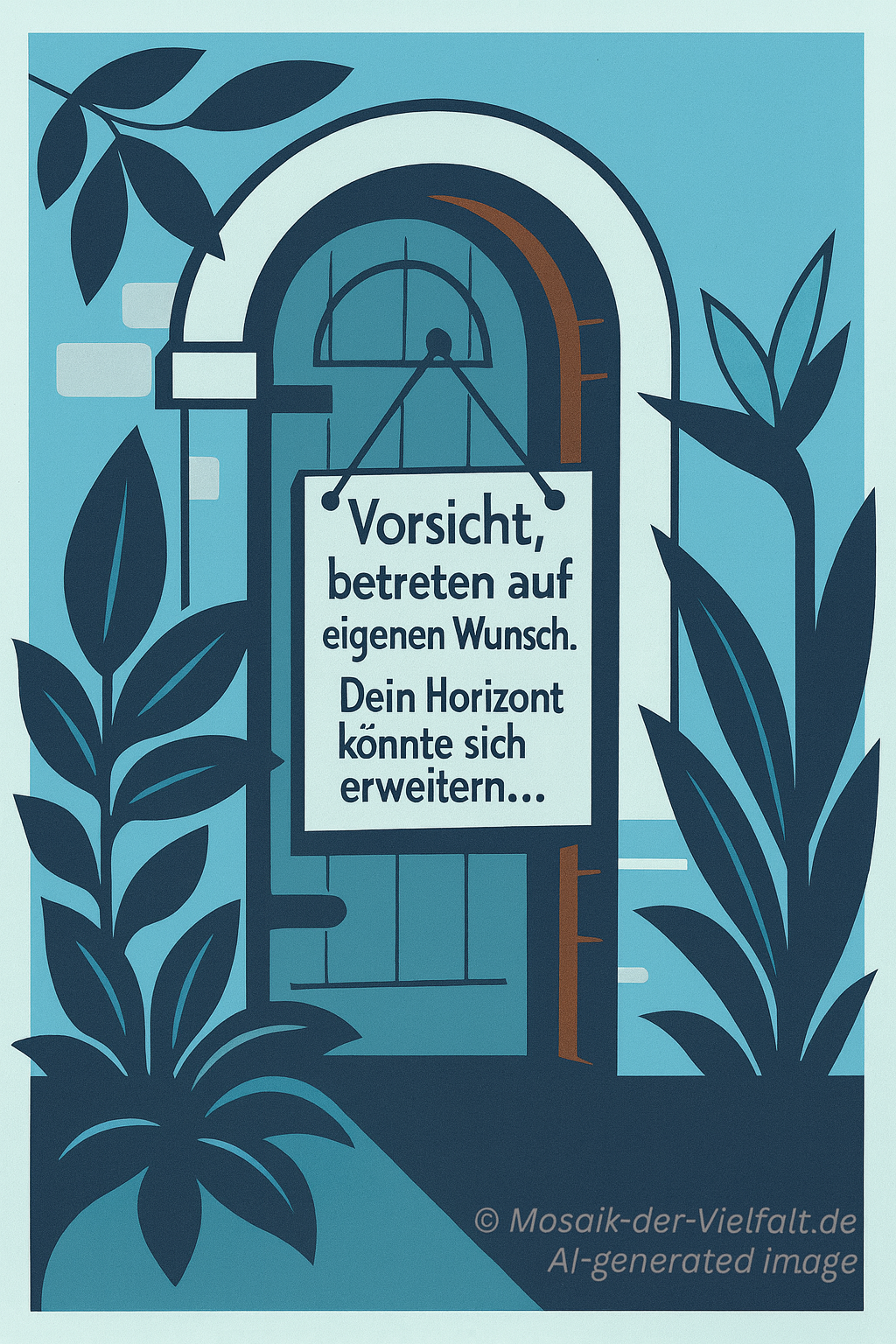
Translation: 'Proceed with caution and curiosity. Your horizon is likely to expand...'
In short, exotic hobbies can be envisaged as a key to a world many people struggle to find access to. They hold a transformative power – not only for the individual but also for those around them:
Culturally enriched activities such as Middle Eastern dance, Latin American salsa or Japanese manga spark curiosity, broaden our horizons and help dismantle fears and prejudices about "the other". By doing so, they act as points of entrance and, more crucially, help build bridges of cross-cultural understanding in an ever more diverse society.
Note: This article reflects my personal experiences. My aim is not to judge but simply to share my own perspective. Although I kept the article deliberately short, I’m aware of the fact that the subject is far more complex and deserving of further consideration.
See you again!